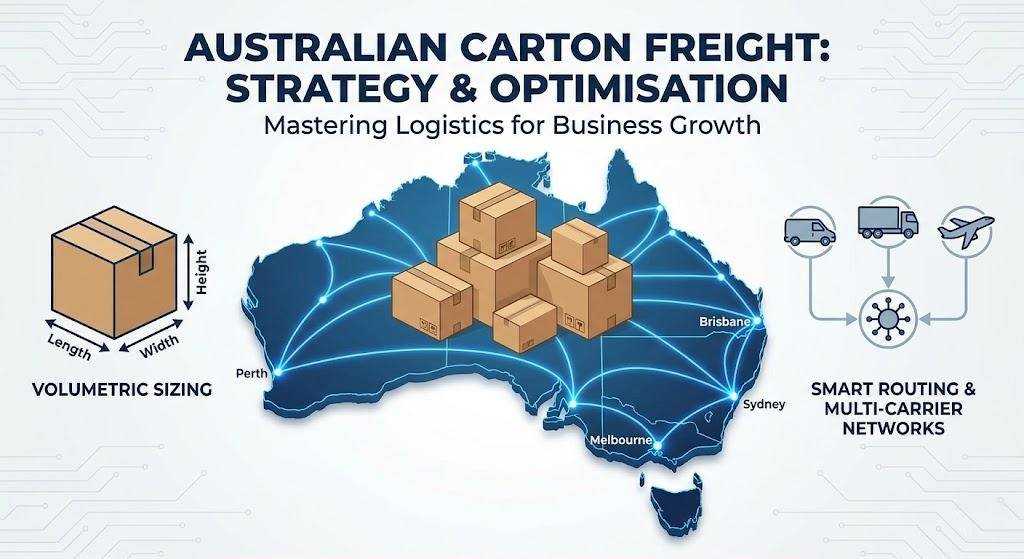
Navigating the complex world of pallet freight in Australia is a fundamental challenge for any business operating within our vast geography. Whether you are moving agricultural goods from regional hubs, coordinating retail stock into Sydney, or managing complex supply chains across the Nullarbor, your ability to move cargo efficiently defines your operational success. This guide is designed to provide you with a comprehensive roadmap for optimising your logistics strategy, reducing overhead, and ensuring your goods arrive on time and in perfect condition.
By following this guide, you will learn how to transition from reactive shipping to proactive supply chain management. You will discover the secrets of pallet procurement, master the complexities of regulatory compliance under the Chain of Responsibility, and learn how to leverage modern technology to scale your operations. This is not just a guide on booking a truck; it is a strategic asset for Operations Managers and business owners looking to build a sustainable competitive advantage in the Australian marketplace.
Understanding the Australian Pallet Freight Landscape
The Australian logistics landscape is defined by extreme distances and a unique reliance on intermodal connectivity. Because of our low population density relative to our landmass, understanding the mechanics of how freight moves is essential for cost control.
The Central Role of Road and Rail Freight in Nationwide Coverage

Optimising your freight strategy: Integrating rail for long-haul interstate transit and road for flexible, last-mile delivery.
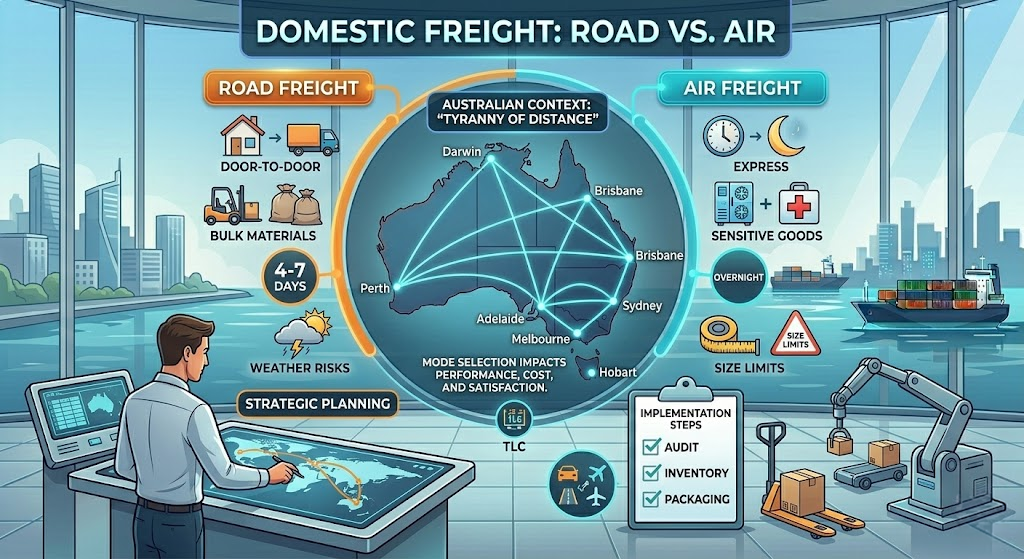
Road freight remains the backbone of domestic logistics, offering the flexibility required for door-to-door delivery. However, for long-haul interstate transit—such as moving cargo from the eastern seaboard to Perth—rail freight offers a highly cost-effective alternative. Businesses that successfully integrate these modes can significantly lower their carbon footprint and reduce total transportation costs. You should view road transport as your “last mile” and “short haul” solution, while reserving rail for the heavy, low-priority movements that form the base of your inventory supply chain.
Key Logistics Hubs: Navigating Port Botany and Major Regional Distribution Points
Port Botany in Sydney stands as one of the most critical gateways for global trade. For businesses importing goods, the efficiency with which you move containerised cargo from the wharf into a deconsolidation warehouse is paramount. These hubs are not just transit points; they are control centres where you must manage customs clearance, quarantine inspections, and rapid distribution to avoid demurrage fees. Understanding the flow of cargo through these hubs allows you to position inventory closer to your end-users, reducing delivery lead times.
The Evolution of Global Supply Chains and Local Resilience
The modern supply chain is increasingly fragile. Global events have taught us that relying on single-source suppliers is risky. Building local resilience means diversifying your logistics partners and maintaining a buffer of safety stock. By integrating regional distribution hubs, businesses can mitigate the risks of global port disruptions, ensuring that even if international supply lines are strained, their domestic fulfilment remains uninterrupted.
Strategic Pallet Procurement: Beyond the Basics
Procurement is often viewed as an administrative task, but in logistics, the pallet is your most essential tool for cargo protection and handling.
Australian Standard Pallet Sizes and Grading Standards
In Australia, the standard pallet size is 1165mm x 1165mm. Using this standardised footprint is critical for compatibility with almost all domestic racking systems and transport equipment. When purchasing or hiring pallets, always be aware of the grading. High-grade pallets are essential for automated warehouse systems, while lower-grade, refurbished pallets may be sufficient for heavy, non-sensitive industrial cargo.
The Economics of Refurbished Timber Pallets vs. New Supply
New pallets offer maximum reliability and structural integrity, but they come at a premium. Refurbished pallets provide a sustainable and cost-effective alternative. If you are shipping high-value, light-weight goods, new pallets offer the peace of mind that load stability won’t be compromised. If you are shipping heavy industrial components, the structural integrity of a well-refurbished, heat-treated pallet is often perfectly adequate, provided it meets the ISPM15 export standards if the cargo is destined for international markets.
Navigating Timber Price Fluctuations and Local Supply Availability
Timber prices are volatile, and supply can be seasonal. Businesses should maintain a diverse supplier base to avoid being left without equipment during peak demand cycles. Establish relationships with local recyclers who can provide refurbished stock quickly, and keep a pulse on the global timber market to anticipate price hikes before they hit your invoices.
Operational Efficiency: Optimising Your Consignments
Efficiency is the difference between a profitable freight department and a cost centre. It requires precise attention to how your goods are prepared for transit.
Consignment Optimisation: Maximising Space to Protect Margins
Every cubic centimetre of space you pay for that is not utilised is a marginal loss. Optimise your cartons to ensure they fit perfectly on a standard pallet without overhang. Overhang increases the risk of damage during handling, while under-utilisation leads to inefficient freight pricing. Use pallet racking software to simulate the best configuration before you begin packing.
Avoiding Costly Packaging Mistakes and Ensuring Load Stability
Load stability is a non-negotiable requirement for WHS compliance. A pallet that shifts during transport is a hazard and a liability. Always use industrial-grade shrink wrap, corner protectors, and, where necessary, metal or plastic strapping. If your cartons are prone to crushing, use tier sheets to distribute the weight evenly across the entire surface of the pallet.
Warehouse Operations: Integrating Pallet Jacks, Forklifts, and Shelving Systems
Your warehouse layout should mirror the flow of your freight. Keep your pallet jacks and forklifts maintained according to the manufacturer’s schedule. Incompatible shelving systems or poorly serviced material handling equipment are leading causes of workplace injuries and cargo damage. Ensure your shelving is rated for the weight of your densest pallets to avoid structural failures.
Risk Mitigation and Regulatory Compliance
Compliance is not merely a legal requirement; it is a defensive strategy for your business.
Work Health and Safety (WHS) and the Chain of Responsibility (CoR)
Under the Heavy Vehicle National Law, everyone in the logistics chain—from the consignor to the receiver—is responsible for safety. If you overload a vehicle or fail to secure a load, you are legally liable, even if you are not the driver. Establish robust “Chain of Responsibility” protocols to audit your partners. Ensure that every load is documented, weighed, and verified before it leaves your dock.
Handling Dangerous Goods: AS1940 Standards, MSDS, and Chemical Storage
Transporting hazardous goods requires strict adherence to AS1940 standards. You must ensure all dangerous goods are clearly labelled, accompanied by a Material Safety Data Sheet (MSDS), and stored in certified chemical-compliant facilities. Never assume a general carrier is equipped to move hazardous cargo; always verify their specific licenses and insurance coverage for your particular class of goods.
Freight Insurance vs. Carrier Liability: Using FreightInsure to Mitigate Risks
Many business owners incorrectly assume their freight is fully covered by the carrier. In reality, most carrier liability is limited to a small amount per kilogram, which rarely covers the replacement value of high-value stock. You must procure separate goods-in-transit insurance. Platforms like FreightInsure allow you to mitigate the risks of damage or loss by providing comprehensive coverage that matches the true commercial value of your cargo.
Managing Freight Claims and Identifying Hazards in Transit
When a claim arises, documentation is your primary defence. Take photographs of every pallet before it is wrapped and again when it is loaded. If goods arrive damaged, ensure the receiver notes the damage on the Proof of Delivery (POD) document immediately. A signature without a note of damage often nullifies your ability to claim, so train your team to inspect every delivery thoroughly upon arrival.
Leveraging Technology in Australian Logistics
Technology has transformed freight from an opaque industry into a transparent, data-driven operation.
The Impact of Australian TMS Platforms on Real-Time Tracking
A Transport Management System (TMS) allows you to consolidate your freight bookings, compare carrier rates, and track the real-time location of your cargo. By integrating a TMS, you can automate your carrier selection process, ensuring you always get the best price for the specific lane and weight of your consignment.
3PL Warehouse Management Systems and Scalable Distribution
If your business is scaling rapidly, a Third-Party Logistics (3PL) provider with a sophisticated Warehouse Management System (WMS) is invaluable. They provide the infrastructure and the visibility to handle spikes in volume without you needing to invest in your own fixed assets. This allows you to focus on your core product while the 3PL manages the complexities of inventory rotation, pick-and-pack services, and final mile delivery.
Multi-Carrier Solutions: Finding the Right Freight Partner for Every Lane
Never rely on a single carrier for all your needs. A multi-carrier strategy allows you to play to the strengths of different providers. Some carriers excel in short-haul metro delivery in Sydney, while others have superior networks for remote regional Australia. Use your TMS to route shipments to the carrier that offers the best blend of speed and price for that specific destination.
Mastering the “Last Mile” and Regional Logistics
The last mile is frequently the most expensive and complex part of the supply chain.
Navigating Residential Addresses and Tail-Lift Delivery Requirements
Residential deliveries are fraught with logistical challenges, including narrow streets and limited space for large trucks. If your customer does not have a loading dock, you must request a tail-lift delivery at the time of booking. Failing to do this often results in failed delivery attempts and significant “re-delivery” surcharges. Always verify the site requirements of your destination before finalising the booking.
Reliable Coverage for Regional and Remote Areas: Overcoming Geographic Hurdles
Shipping to remote Australia requires careful planning. Transit times will be longer, and the cost of the last leg is often higher. Communicate realistic expectations to your customers regarding delivery timeframes. Use reputable regional couriers who understand the terrain, as they are less likely to encounter the issues that plague generalist city-based carriers.
Specialised Equipment: From Tilt Trays to Hiab Cranes for Oversized Cargo
If your cargo is oversized or cannot be unloaded via a standard forklift, you need specialised equipment. A Tilt Tray truck is ideal for equipment that can be slid off the back, while a Hiab crane is necessary for lifting heavy, awkward loads where no external infrastructure exists. Always confirm the unloading capabilities of your receiver to avoid being charged for “waiting time” or “detention fees” when the driver arrives.
Freight Cost Management and Pricing Strategies
Cost management is about understanding the variables that affect your final invoice.
Deciphering Honest Quotes: Understanding Surcharges and Pincode Variables
When you receive a quote, look closely at the surcharges. Fuel levies, remote access fees, and tail-lift charges are common. Some providers offer “all-in” pricing, while others break these down. Always calculate the “landed cost” of your freight, rather than just the base rate. Pay attention to how different carriers treat pincodes; a suburb that is only a few kilometres away might fall into a different charging zone for some carriers, leading to unexpected price variances.
Reducing Manual Tasks through Logistics Automation
Manual data entry is a source of error and a drain on resources. Integrate your e-commerce platform or ERP directly with your freight provider’s API. This ensures that shipping labels are generated automatically, weight and volume are captured accurately, and tracking information is sent to the customer without human intervention. This shift reduces your administration overhead and minimises the risk of shipment errors.
Strategies for Peak Seasons and Managing Supply Chain Disruptions
During peak seasons, such as the lead-up to Christmas, capacity becomes scarce, and prices rise. The most successful businesses plan for this by securing volume agreements well in advance. Diversify your career pool to ensure you have a “Plan B” if your primary carrier hits capacity limits. By maintaining constant communication with your logistics partners, you can anticipate disruptions and adjust your shipping schedules to bypass the worst bottlenecks.
What’s Next?
You have now explored the essential components of managing pallet freight in Australia, from the structural importance of standard sizing to the strategic integration of TMS platforms and the critical legalities of the Chain of Responsibility. By shifting your approach to focus on load optimisation, risk mitigation, and proactive technology adoption, you are well-positioned to transform your logistics from a standard operational task into a significant competitive advantage.
To move forward, start by auditing your current shipping data. Analyse your last six months of invoices to identify which routes, carriers, and pallet configurations are driving your highest costs. Once you have identified these “pain points,” implement a pilot program with a new carrier or a new packaging standard to measure the impact on your bottom line.
Summary of Actionable Next Steps:
- Conduct a Compliance Audit: Review your existing CoR protocols to ensure that every member of your team understands their legal obligations under the Heavy Vehicle National Law.
- Evaluate Your Technology: Assess whether your current booking method provides the visibility you need. If you are still booking freight via email or phone, it is time to transition to a TMS platform for real-time tracking and cost comparison.
- Optimise Packaging: Perform a test run with a new, stabilised pallet configuration to see if you can reduce the number of pallets per order or increase the density of your load without risking cargo damage.
- Strengthen Risk Management: Contact your insurance provider today to confirm that your goods-in-transit policy covers the true commercial value of your cargo, rather than relying solely on carrier liability.
- Audit Your Supplier Base: Diversify your pallet and carrier suppliers to ensure that you are not exposed to single-source failure during peak seasonal demand.
By consistently applying these principles, you will ensure that your business remains agile, efficient, and resilient, regardless of the challenges the Australian logistics landscape may throw your way. Continuous improvement is the hallmark of a world-class supply chain. Review these processes quarterly, adapt to market changes, and keep your logistics operations lean, compliant, and always in motion.
For Australian businesses that regularly move palletised goods, Clique Logistics can help as a practical freight partner. Clique Logistics helps businesses coordinate pallet freight across Australia by supporting carrier selection, freight visibility, route planning, shipment coordination, and communication across local, regional, and interstate freight requirements.
This makes Clique a suitable partner for SMEs, retailers, wholesalers, manufacturers, distributors, and eCommerce businesses that want a more reliable and structured approach to managing pallet freight, reducing freight complexity, and keeping goods moving efficiently across Australia.