For Australian small and medium-sized enterprises (SMEs), logistics has evolved from a back-office necessity into a frontline strategic pillar. In an era defined by volatile interest rates, inflationary pressure, and heightened consumer expectations, how you manage your freight is no longer just about moving goods—it is about protecting your bottom line. This guide is designed for business owners and operational managers who need to reconcile the rising cost of transport with the urgent requirement for reliable, efficient delivery. You will learn how to audit your current freight spend, implement digital intelligence to automate decision-making, and leverage your supply chain as a competitive advantage. By the end of this article, you will have a clear roadmap to transform freight from a volatile expense into a structured, scalable, and resilient profit driver.
The Current Landscape: Why Freight Strategy is a Survival Pillar for Australian SMEs
The logistics environment in Australia is currently navigating a period of unprecedented complexity. SMEs are operating under a “middle squeeze,” where the cost of doing business—fuel, labour, and maintenance—is climbing, while customers simultaneously demand faster, cheaper, and more transparent shipping. This section explores why a disciplined freight strategy is essential for survival.
Navigating the “Middle Squeeze”: Cost Pressures vs. Customer Expectations

The ‘Middle Squeeze’: How rising carrier costs and heightened consumer expectations compress SME profit margins.
Small businesses in Australia are facing a dual threat. On one side, carrier networks are passing on rising operational costs, such as electricity hikes and fuel levies, directly to shippers through complex surcharge structures. On the other hand, the Amazon effect has conditioned customers to expect near-instant, low-cost fulfilment. This “middle squeeze” erodes profitability. To navigate this, SMEs must stop treating freight as a fixed overhead and start managing it as a variable cost that can be optimised through policy, carrier selection, and customer communication.
The Link Between Logistics Efficiency and Financial Stability in a High-Interest Rate Environment
When interest rates are high, the cost of holding inventory becomes expensive, and the pressure on cash flow intensifies. Inefficient logistics—such as prolonged transit times or high-frequency damage—tie up working capital and delay revenue recognition. Improving logistics efficiency is, therefore, a direct intervention in your company’s financial stability. By reducing the “dwell time” of goods in your network and minimising administrative overhead, you free up cash that can be reinvested into core growth activities rather than being lost to shipping waste.
Understanding the Macro-Economic Impact on Australian Logistics
Macro-economic volatility is the hidden architect of your shipping costs. To manage your budget effectively, you must understand how external economic forces dictate the behaviour of carrier networks and, ultimately, your final invoice.
Insights from the Financial Stability Review: Protecting Cash Buffers and Profit Margins
The Reserve Bank of Australia’s Financial Stability Review consistently highlights how rising costs ripple through the supply chain. For an SME, this means that carrier surcharges are rarely static. Understanding that your freight provider is also struggling with rising interest rates and input costs allows you to anticipate, rather than just react to, price adjustments. Protecting your profit margins requires a proactive approach to auditing invoices and maintaining a “cash buffer” specifically reserved for logistics fluctuations.
How Inflation and Discretionary Consumer Spending Affect Shipping Volumes
Inflationary pressures directly dictate consumer sentiment. As households tighten their belts, discretionary spending in sectors like retail and lifestyle declines, leading to lumpy or unpredictable shipping volumes. SMEs that rely on fixed-volume contracts often find themselves overpaying during quiet periods. The strategic pivot here is to transition toward flexible, multi-carrier models that can scale up or down based on real-time market demand, rather than committing to rigid shipping volumes that cannot accommodate economic ebbs and flows.
Managing Interest Rate Pressures through Leaner Supply Chain Operations
In a high-interest-rate climate, capital is expensive. Leaner supply chains rely on faster turnover of stock. By reducing the complexity of your logistics—such as consolidating small shipments into bulk pallets or utilising regional distribution points—you shorten the time from production to sale. This minimises the period for which you need to finance inventory, effectively insulating your business from the worst impacts of credit and interest rate volatility.
Leveraging Technology: The Shift from Manual Processes to Digital Intelligence
Moving away from spreadsheets is the most significant step an SME can take toward professionalising its logistics. Digital intelligence provides the visibility required to make informed financial decisions.
The Role of Transport Management Software (TMS) in Modern Logistics
A Transport Management Software (TMS) serves as the “digital nervous system” of your logistics operation. It centralises carrier communications, consolidates documentation, and provides a single source of truth for all shipping activities. For Australian SMEs, a TMS is the primary tool for mitigating human error, which is the leading cause of unexpected surcharges and shipping delays.
AI-Driven Shipping Intelligence: Using VelocityOS.ai to Optimise Carrier Selection
Advanced platforms like VelocityOS.ai represent the new frontier of shipping intelligence. Rather than relying on gut feeling, AI-driven tools analyse millions of data points to select the most cost-effective and reliable carrier for every individual parcel. By automating the selection process, these systems ensure that your business always adheres to the most economical routes, simultaneously slashing fuel-based surcharges and improving delivery speed.
Real-Time Data and Shipment Tracking: Protecting the Customer Experience (CX)
Modern customers demand proactive information. Real-time tracking is no longer a luxury; it is a retention tool. By integrating automated notifications into your TMS, you can manage customer expectations regarding delivery windows, reducing “where is my order” (WISMO) support queries. This transparency not only builds loyalty but also reduces the administrative burden on your support team, allowing them to focus on high-value interactions.
Automation and Digital Job Cards: Reducing Errors and Administrative Overhead
Manual data entry is a silent killer of SME profit. Every typo on a shipping label or manual entry of an address is a potential for failed delivery, re-delivery fees, or lost goods. Digital job cards and automated label printing ensure that data flows directly from your sales system to the carrier’s network. This seamless integration eliminates the “manual touch” that leads to costly administrative overhead.
Strategic Carrier Network Management
Your choice of carrier should never be static. A diversified network is your best defence against regional disruptions and pricing spikes.
Diversifying Your Career Portfolio: Beyond Door-to-Door Domestic Couriers
Relying on a single major carrier is a significant risk. If that carrier experiences a service outage or introduces an aggressive rate hike, your entire business is exposed. By building a portfolio that includes national providers, regional specialists, and even local couriers, you create competitive tension that keeps costs in check. This strategy allows you to switch routes based on which provider currently offers the best balance of speed and cost for specific destinations.
Evaluating Service Levels: Tail Lift, Depot Delivery, and Specialised Freight Services
Understanding the nuance of service levels is essential for cost control. Many SMEs unknowingly pay premium rates for “door-to-door” service when “depot-to-depot” or “tail-lift” services would suffice. Carefully auditing the specific delivery requirements of your clients—and matching them to the appropriate service level—can result in immediate and substantial cost savings. Never pay for a service you do not strictly require.
Route Evaluation and Shipping Zones: Navigating Costs in Sydney, Melbourne, and Brisbane
Australia’s geography makes shipping zones highly complex. Logistics costs differ significantly when moving goods from a hub in Sydney to regional Western Australia versus inter-metro deliveries in Melbourne or Brisbane. Mapping your shipping frequency to these zones allows you to negotiate volume discounts on high-traffic routes. If you have high volumes heading into Brisbane, consider utilising a regional partner to handle the last mile, which is often cheaper than forcing a national carrier to complete the delivery in a non-core area.
Tactical Cost Reduction Strategies for Heavy and Bulky Goods
Bulky goods are the most expensive category to ship. Reducing costs here requires a fundamental rethink of packaging and logistics physics.
Maximising Efficiency with Pallets of Stock and Interstate Shipping
When shipping heavy items, palletisation is generally more cost-effective than individual parcel shipping. Consolidating stock into palletised units reduces the number of handling events and significantly lowers the likelihood of damage. For interstate transit, moving full pallets through freight networks—rather than courier networks—often unlocks bulk rate discounts that are unavailable for individual parcel consignments.
The Financial Benefits of Backloading for Australian SMEs
Backloading involves using the empty return space in a truck that has already completed a delivery. For many Australian transport companies, this space is essentially wasted if not sold. By coordinating with your logistics provider to fill this “dead space,” you can often secure shipping rates at a fraction of the cost of a dedicated haul. It requires flexibility in timing, but the cost savings are substantial.
Right-Sizing Packaging to Minimise Surcharges and Dimensional Weight Costs
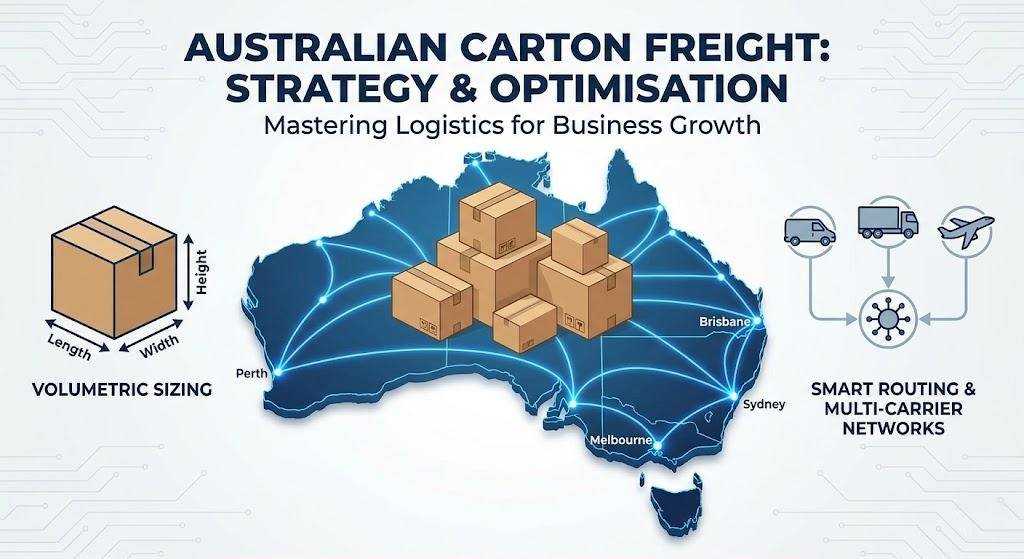
Carriers charge based on either actual weight or volumetric weight—whichever is higher. “Air shipping” (paying to transport empty space inside an oversized box) is a direct drain on your bottom line. Investing in bespoke packaging or automated sizing technology ensures you are only paying for the footprint your product occupies. This simple change reduces both your freight costs and your carbon footprint, aligning with the growing consumer preference for sustainable practices.
Future-Proofing through Sustainability and Regulatory Alignment
Sustainability is shifting from a corporate social responsibility talking point to a core regulatory requirement. Leveraging this shift can open doors to new contracts and efficiency gains.
Linking the Net Zero Plan to Long-Term Cost Savings
The Australian government’s Net Zero commitment is driving infrastructure changes that will eventually lower the cost of green transport. By auditing your supply chain for emissions now, you identify areas where energy usage is highest. Optimising these areas—such as reducing fuel consumption through route optimisation—simultaneously lowers your operating costs and aligns your business with future regulatory mandates.
Navigating the Climate Change Act 2022: What SMEs Need to Know About Emissions Reporting
The Climate Change Act 2022 puts a spotlight on industrial emissions. While not all SMEs are currently required to report, the supply chain downstream is increasingly asking for emissions data from their suppliers. Preparing for this by quantifying your freight carbon footprint now gives you a competitive advantage when bidding for tenders or working with larger corporate partners who have their own strict ESG targets.
Green Logistics: Solar Power, EV Adoption, and Reducing the Carbon Footprint of the Transport Sector
The shift to electric vehicles (EVs) in the light-commercial sector is rapidly accelerating. For businesses with their own small delivery fleets, transitioning to EVs—supported by onsite solar power—can slash fuel and maintenance expenses over the vehicle’s lifecycle. Even if you outsource logistics, choosing carriers that prioritise fleet electrification is a way to ensure your business remains compliant with the evolving standards of the Australian transport sector.
Protecting Cash Flow and Managing Financial Risk
Freight costs, if left unchecked, can quickly lead to a “cash flow shortfall” that threatens the viability of your business.
Addressing the “Cash Flow Shortfall”: Trade Credit and Inventory Financing
Effective inventory management ensures that you are not tying up cash in stock that sits in a warehouse waiting for a truck. By aligning your procurement with your logistics schedule—ensuring that stock arrives only as needed (Just-in-Time), you maximise your available cash. For SMEs, utilising trade credit with reliable logistics partners can also provide a 30-to-60-day buffer that helps keep working capital fluid.
Understanding Surcharges: How to Audit Invoices and Prevent Margin Erosion
Carrier invoices are notorious for “hidden” surcharges—fuel levies, residential surcharges, peak season fees, and manual handling fees. If you are not auditing these, you are almost certainly overpaying. A professional audit strategy involves verifying that every surcharge applied to your invoice matches the contract terms. Use your TMS to flag anomalies automatically; if you don’t audit, you are essentially providing an open invitation for margin erosion.
Mitigating Insolvency Risks through Logistics Resilience and Resourceful Planning
Logistics failure is a common precursor to business insolvency. If your goods don’t reach the customer, your revenue cycle stops. Resilience planning involves having contingencies for every major node in your supply chain. What happens if a major bridge in Sydney closes? What if a carrier in Melbourne experiences a strike? Diversifying your logistics portfolio and maintaining strong relationships with multiple service providers ensures that your operations remain continuous regardless of local or national disruptions.
Strengthening the Last Mile: Balancing Speed and Spend
The last mile is the most expensive and complex part of the journey. Achieving balance requires a strategic approach to customer expectations versus operational capability.
The “last mile” often accounts for over 50% of total shipping costs. To manage this:
- Offer tiered shipping: Allow customers to choose between “Express” and “Economy” options. This shifts the cost burden appropriately.
- Use Click-and-Collect: Incentivising local pickup reduces the need for costly residential deliveries.
- Optimise address validation: Ensure your checkout system uses accurate address validation software to prevent failed deliveries and the associated re-delivery fees.
- Batch your deliveries: Where possible, communicate realistic delivery windows that allow your carriers to batch drops in specific suburbs, reducing the “one-off” delivery costs.
What’s Next?
You have now explored the strategic pillars required to reduce freight costs while maintaining operational reliability. To summarise, the journey from viewing freight as a cost centre to a profit driver involves four critical actions:
- Digitise your operations: Replace manual spreadsheets with a robust Transport Management System (TMS) to eliminate human error and provide real-time data visibility.
- Audit aggressively: Implement a consistent process to audit carrier invoices for hidden surcharges and ensure contract compliance.
- Optimise for the long term: Shift your packaging to minimise dimensional weight, embrace backloading for heavy goods, and transition toward sustainable logistics practices that align with the Climate Change Act 2022.
- Diversify your network: Move away from single-carrier reliance to create a flexible, multi-carrier ecosystem that protects you against localised economic shocks in cities like Sydney, Melbourne, and Brisbane.
Immediate Next Steps:
- Audit your last three months of shipping invoices: Look specifically for recurring surcharges (e.g., residential, tail-lift). Can you change your packaging or processes to avoid these?
- Assess your current tech stack: Are you using a TMS, or are you still relying on manual tracking? If the latter, research scalable platforms that offer API integrations with your existing sales channels.
- Contact your carriers: Request a review of your current volume and service levels. Use your shipping data to negotiate better rates based on your actual, current-year activity.
By treating freight as a high-value information management problem rather than just a physical moving problem, you will not only reduce costs but also build a more resilient, customer-focused, and profitable Australian business. Start with one area—perhaps the invoice audit—and build momentum from there. The goal is to create a logistics operation that is as agile as the market it serves.
For Australian businesses that want to reduce freight costs without compromising reliability, Clique Logistics can help as a practical freight management partner. Clique Logistics helps businesses make smarter freight decisions by improving carrier coordination, freight visibility, shipment planning, service selection, and cost control across domestic, interstate, and international freight requirements.
This makes Clique a suitable partner for SMEs, retailers, wholesalers, manufacturers, distributors, and eCommerce businesses that want to manage freight more strategically, reduce unnecessary costs, and build a more reliable logistics operation as they grow.